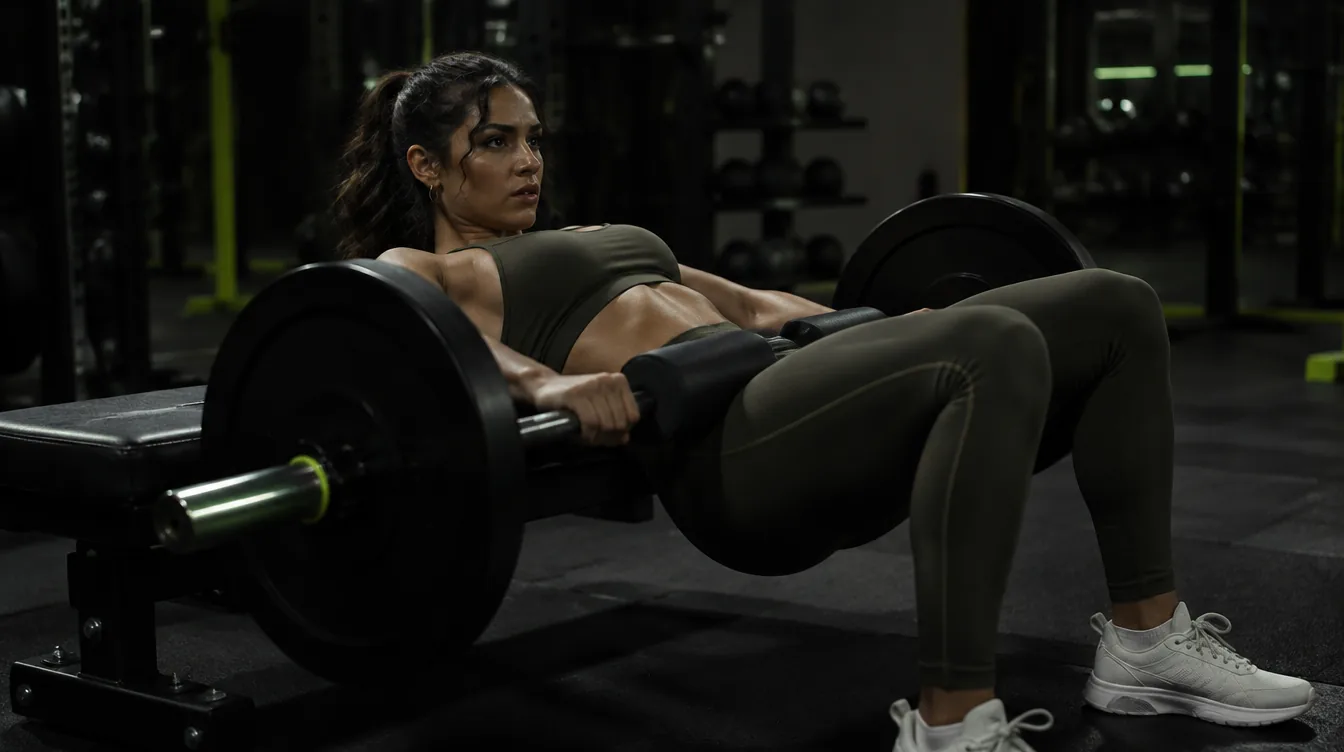
If you are new to the gym, the best routine is full body, 3 days a week, built on 5 or 6 basic exercises. You train every muscle three times a week, you practice the movements that matter most, and you get a rest day between sessions to recover. The full 4-week plan is below, ready to use.
This is the same structure we use in the Focus starter program. You don't need supplements, two hours a day or any experience. You need to show up three times a week and write down what you do.
Why full body instead of "one muscle a day"
Splits like "Monday chest, Tuesday back" come from advanced bodybuilding. For a beginner they have two problems: each muscle gets trained only once a week, and you repeat each movement so rarely that your form takes longer to click.
With a full-body routine you practice the squat, a push, a pull and a hip hinge three times a week. Early on, most of your progress comes from your nervous system learning the movement, and frequent practice speeds that up.
The routine: two sessions that alternate
Do Session A and Session B on alternating days: Monday A, Wednesday B, Friday A. Next week you start with B. Each session repeats 6 times over the 4 weeks.
Session A
| Exercise | Sets | Reps | Rest |
|---|---|---|---|
| Goblet squat | 3 | 8 to 12 | 90 s |
| Dumbbell bench press | 3 | 8 to 12 | 90 s |
| Lat pulldown | 3 | 10 to 12 | 75 s |
| Dumbbell Romanian deadlift | 3 | 10 to 12 | 90 s |
| Plank | 3 | 20 to 40 s | 45 s |
Session B
| Exercise | Sets | Reps | Rest |
|---|---|---|---|
| Leg press | 3 | 10 to 15 | 90 s |
| Seated dumbbell shoulder press | 3 | 8 to 12 | 90 s |
| Seated cable row | 3 | 10 to 12 | 75 s |
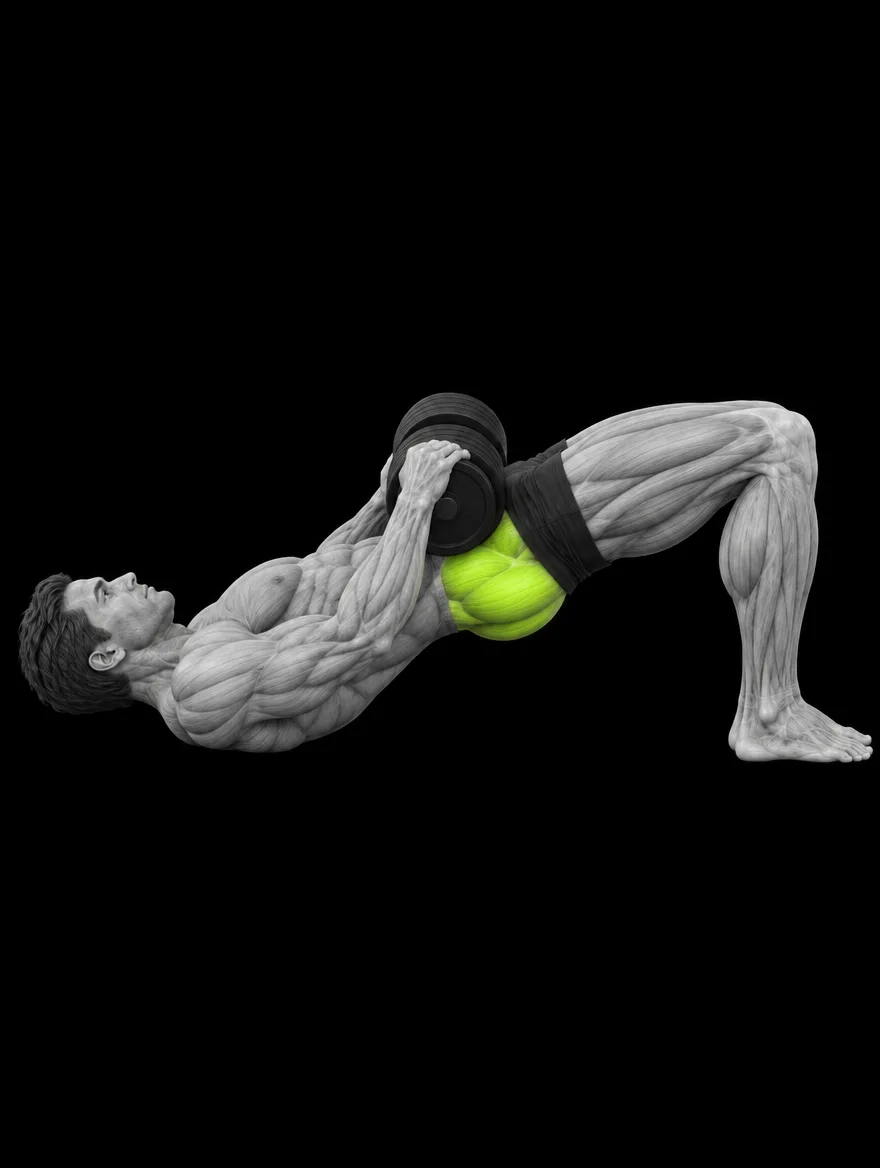
| Glute bridge | 3 | 12 to 15 | 60 s |
| Dead bug | 3 | 8 per side | 45 s |
How to do each exercise
Tap any of them for the full 3D demo, step by step, with the most common mistakes.
 Goblet SquatElbows brush the inside of your kneesDumbbell Bench PressElbows at 45 degrees
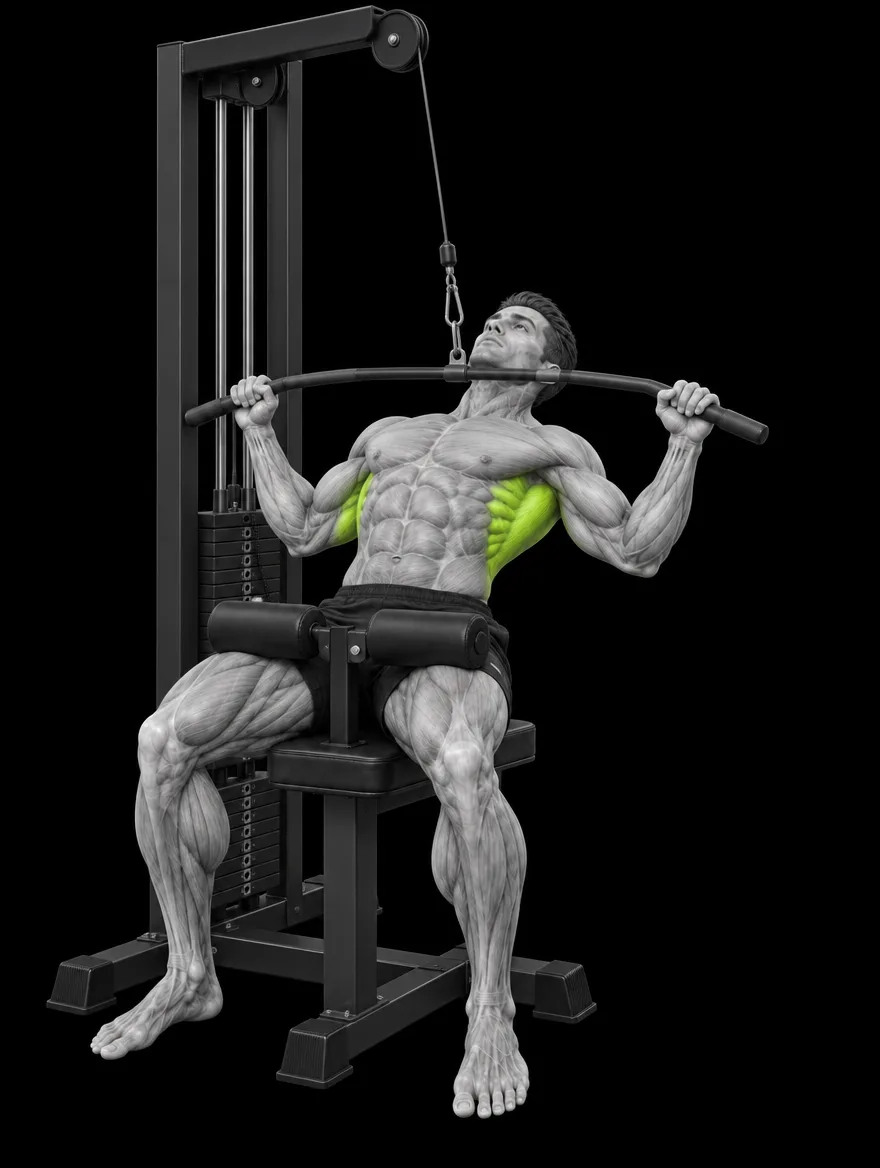 Lat PulldownThink elbows to your back pockets
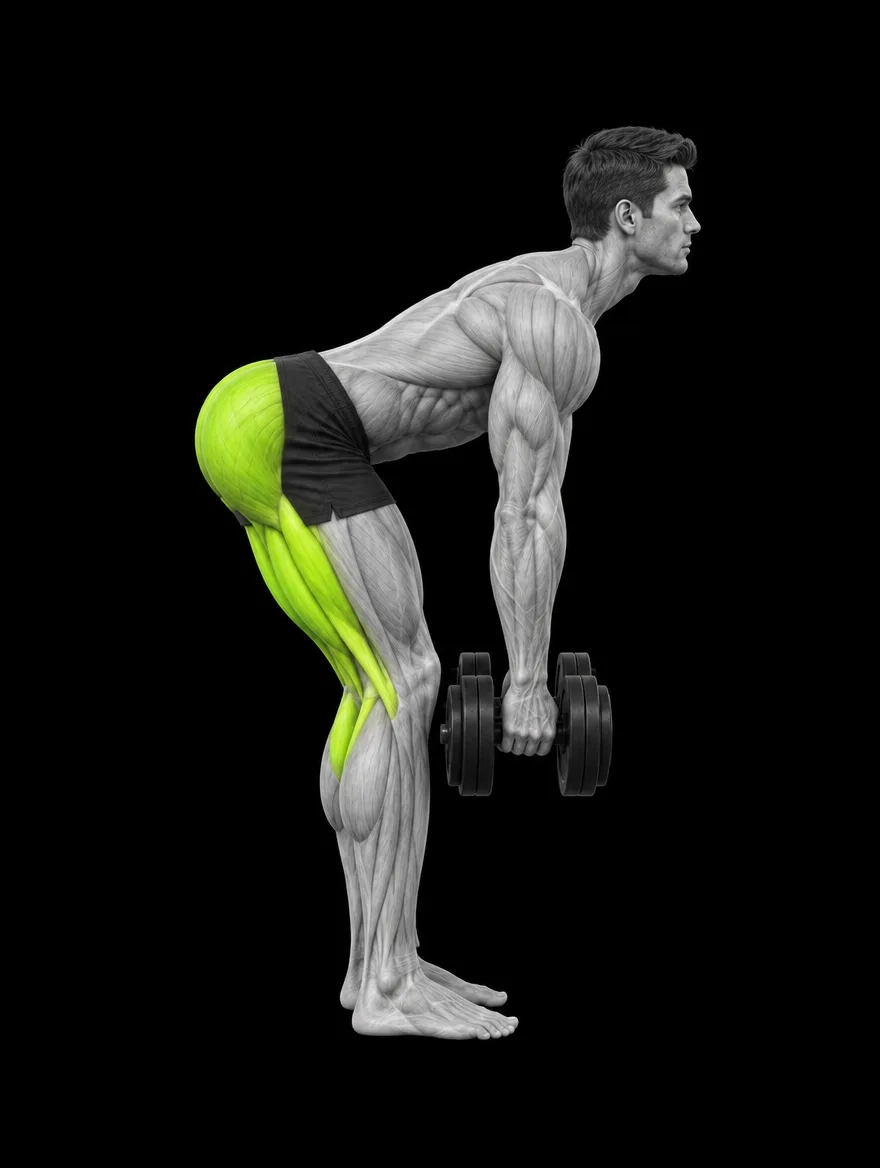 Romanian DeadliftNeutral back the whole timePlankTuck your pelvis slightlyLeg PressKnees track over your toesSeated Dumbbell Shoulder PressBack against the padSeated Cable RowTorso nearly still
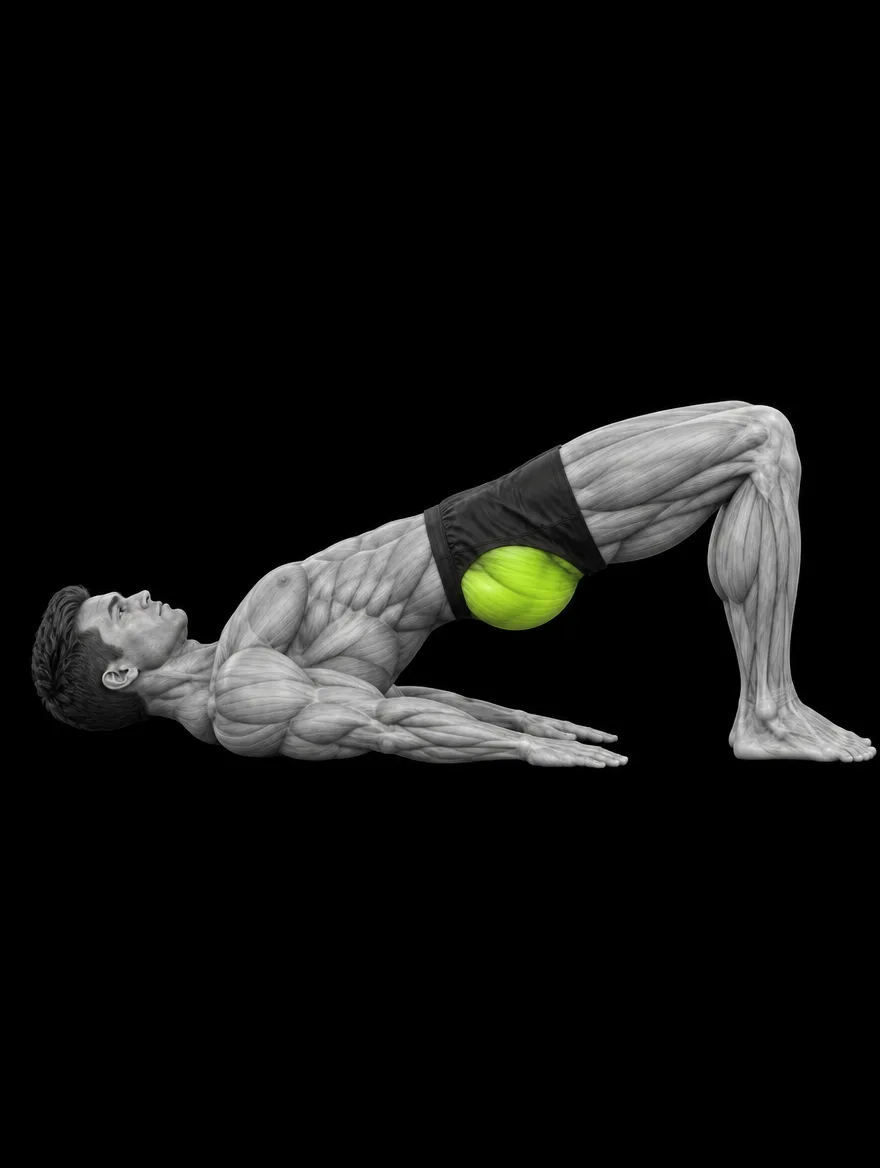 Glute BridgePush through your heelsDead BugLower back stays on the floor
Your week, day by day
| Day | What to do |
|---|---|
| Monday | Session A |
| Tuesday | Active rest: a 20 to 30 minute walk |
| Wednesday | Session B |
| Thursday | Rest |
| Friday | Session A |
| Saturday | Optional: 20 to 40 minutes of easy cardio or a sport |
| Sunday | Rest |
If Monday, Wednesday and Friday don't work, use any 3 days that aren't back to back, like Tuesday, Thursday and Saturday.
How to add weight: the rep range rule
Every exercise has a rep range, for example 8 to 12. Start with a weight that lets you do 8 clean reps on every set, finishing with 2 or 3 reps left in the tank.
- Each session, try to beat last time by one rep.
- When you hit the top of the range (12) on all 3 sets, add weight next session: 1 to 2 kg (2 to 5 lb) for upper body, 2 to 5 kg (5 to 10 lb) for legs.
- With the new weight, start again from 8 reps.
This is called double progression, and it is the simplest way to apply progressive overload. It works because you never add weight before you own it.
You don't need a perfect routine. You need a reasonable one that you do three times a week for months, writing down every set.
Week by week
- Week 1: go light. The goal is to learn each movement and find your starting weights. Finish every session feeling you had more in you.
- Week 2: find the weight that gets you 8 reps with 2 in reserve. Log everything.
- Week 3: apply double progression. You should gain reps almost every session.
- Week 4: keep progressing. If an exercise stalls two sessions in a row, keep the weight and clean up your form.
An 8-minute warm-up
- 3 to 5 minutes on the treadmill, bike or elliptical at an easy pace.
- 10 bodyweight squats, 10 glute bridges and 10 arm circles.
- Before your first exercise, 1 or 2 light sets of 8 reps at half your working weight.
Mistakes that hold almost every beginner back
- Changing routines every week. Your body improves through repetition. Four weeks is the minimum to see real progress.
- Adding weight at the cost of form. If your range of motion shrinks or your back rounds, the weight is too heavy.
- Not logging. Without a record you can't tell if you are progressing. Write down the weight and reps of every set, on paper or in an app.
- Forgetting food and sleep. Enough protein and 7 to 9 hours of sleep matter as much as the routine. To find your protein target, read our guide on how to calculate your macros.
What comes after 4 weeks
If you finished all 12 sessions, you have a base. You can keep running this routine as long as the weights keep going up, or move to a 4-day upper/lower split or a push pull legs routine if you want to train more often.