Progressive overload means gradually increasing the demand on your muscles over time: more weight, more reps or more sets. It is the number one principle of strength training. If you do the same thing every week, your body has no reason to change.
The key word is "gradually". Jump too fast and your form breaks down and you get hurt. Go too slow and you stall. Below are the 5 levers you can pull and how to combine them.
The 5 ways to progress
| Lever | Example | When to use it |
|---|---|---|
| More weight | Squat goes from 60 kg to 62.5 kg | When you hit every rep in the range with good form |
| More reps | 3 x 8 to 3 x 10 at the same weight | Between weight jumps, or when the next jump is too big |
| More sets | 3 sets to 4 sets | When weight and reps have stalled for weeks |
| Better form and range | Squatting deeper | Always, especially early on |
| Less rest | Rest from 120 s to 90 s | On isolation work or conditioning phases |
1. More weight
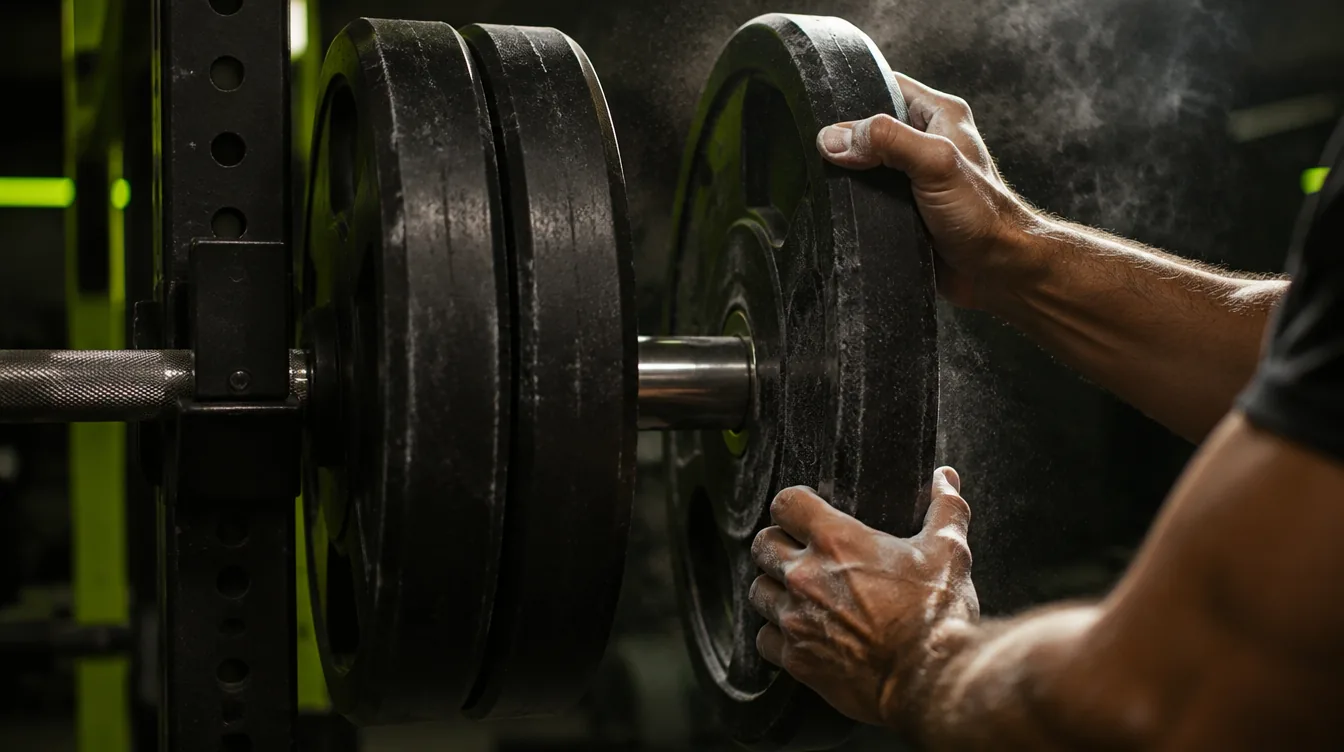
The most direct lever. On big leg lifts (squat, deadlift, leg press) you can add 2.5 to 5 kg (5 to 10 lb). On upper body, 1 to 2.5 kg (2.5 to 5 lb). If your gym's dumbbells jump in big steps, use reps first.
2. More reps
With the same weight, do one or two more reps than last session. When you reach the top of the range, add weight and drop back to the bottom. This combination is called double progression, and it is what we use in our beginner gym workout plan.
3. More sets
Adding a set raises your total volume, one of the factors most tied to muscle growth. Use it with care: going from 3 to 4 sets on every exercise at once can be too much.
4. Better form and more range
Squatting deeper or pausing at the bottom of a bench press makes the same weight harder. For a beginner, owning the technique already counts as progress.
5. Less rest
Shorter rests make the session denser. That helps on small exercises, but on heavy basics, short rest usually costs you reps. For strength, 2 to 3 minutes between heavy sets is normal.
Progressing doesn't mean adding weight every session. It means that month over month you can do more than you could before.
A 6-week bench press example
| Week | Weight | Reps per set |
|---|---|---|
| 1 | 50 kg | 8, 8, 8 |
| 2 | 50 kg | 10, 9, 9 |
| 3 | 50 kg | 12, 11, 10 |
| 4 | 50 kg | 12, 12, 12 |
| 5 | 52.5 kg | 9, 8, 8 |
| 6 | 52.5 kg | 11, 10, 9 |
What to do when you stall
- Check sleep and food. Short sleep or eating far below your calories stalls progress more than any routine. If you don't know how much to eat, see how to calculate your macros. With the basics covered, creatine can add one or two reps per set.
- Drop the weight 10% and build back up. A lighter week often unlocks progress.
- Change the rep range. If you have lived at 8 to 12 for months, try 5 to 8 on the basics.
- Change the variation. Swap the barbell bench for dumbbells for 4 to 6 weeks.
The tool that makes it work: logging
You can't apply progressive overload if you don't remember what you did last time. Log the weight, sets and reps of every exercise. A notebook works; an app is faster and shows your trend.